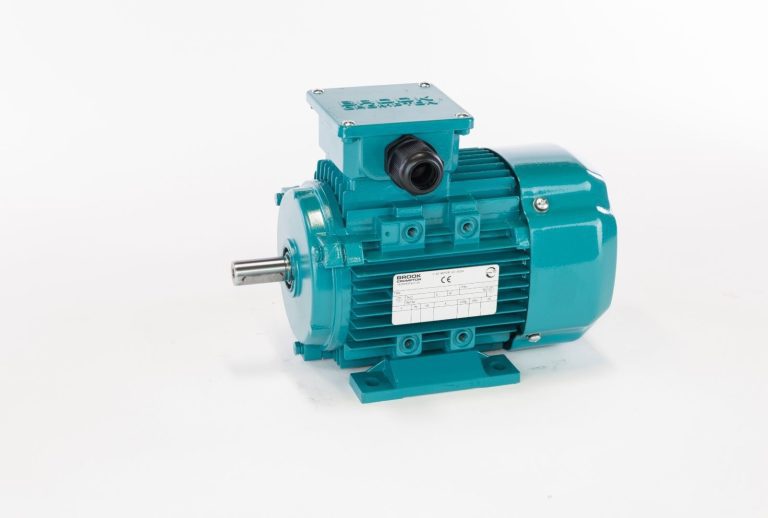

Payback Period for Electric Motors
What is the Payback Period?
The payback period is the time it takes for a motor to “pay for itself” through cost savings. For electric motors, this usually comes from:
• Energy savings through improved efficiencies
• Reduced maintenance and downtime
Calculating the Payback Period
For electric motors, the payback period is calculated by the initial cost of the motor ÷ annual savings you would gain from energy savings
Payback Period = Initial Cost / Annual Savings
IE3 Motor Payback Period: 2.81 years = £2219.40 / £789.70
IE4 Motor Payback Period: 2.27 years = £2583 / £1139.66
IE2 upgraded to IE3

IE2 upgraded to IE4

The Calculations:
First, the annual energy cost is calculated using the formula below.
Annual Cost (£)=Motor Power (kW)×Load Factor (per unit)×Annual Hours×Electricity Cost (£/kWh)
For a 45kW motor, the annual cost would be calculated as such:
£19656 = 45 x 0.75 x 2080 x 0.28
Assumptions:
Hours: 8 hr/day × 5 days/week × 52 weeks = 2,080 hr/year
Electricity: £0.28/kWh (the UK business average)
Electric motor lifespan 10-20 years (the average for electric motors under normal operating conditions)
New 45kW WE range motor IE3 efficiency £2219.40
(Discounted at 40% from the list price)
New 45kW WE range motor IE4 efficiency £2583
(Discounted at 40% from the list price)
Why It Matters for Electric Motors
Motor efficiency directly affects operating costs:
> IE2 motors are robust and lower-cost. Best for low running hours or minimal energy savings.
> IE3 motors balance efficiency and cost, reducing energy use and extending motor life.
> IE4 motors deliver higher efficiency for high-power, continuous applications, shortening payback periods.
> IE5 motors deliver ultra-premium efficiency with advanced designs such as PM or SynRM, ideal where maximum savings and high efficiency are required.
Choosing the right motor for your application ensures faster ROI and lower total cost of ownership.
To Keep in Mind
While maintenance and downtime can only be estimated, choosing reputable brands and premium motors helps reduce these costs, thanks to higher-quality materials, better design, and longer-lasting components.
Additionally, premium motors last longer, meaning they won’t need to be replaced as often, further increasing profit after investment.
3 Top Tips to Reduce the Payback Period
1. Select a motor efficiency based on your motor price, energy costs, and operational time.
2. Maintain regular motor servicing to preserve efficiency and reduce unexpected downtime.
3. Take energy costs into account, as higher electricity prices make higher-efficiency motors more worthwhile and shorten the payback period.
Conclusion
Calculating the payback period is a straightforward way to assess motor investments. By considering efficiency, running hours, and energy costs, you can select the motor that delivers the fastest savings. Higher-efficiency motors are also designed to meet stricter energy regulations, making them less likely to become outdated and reducing the need for future upgrades.