
Brook Crompton Motor Efficiencies
A big name, a lot of choice. But how do you know which will benefit you the most?
IE2 Motors
While ahead of the curve on IE3+ motor efficiency, providing IE2 motors is still important. If you aren’t going to get much benefit from high-efficiency motors, what’s the point?
But you also don’t want it to crumble after a couple of years, so they need to be reliable.

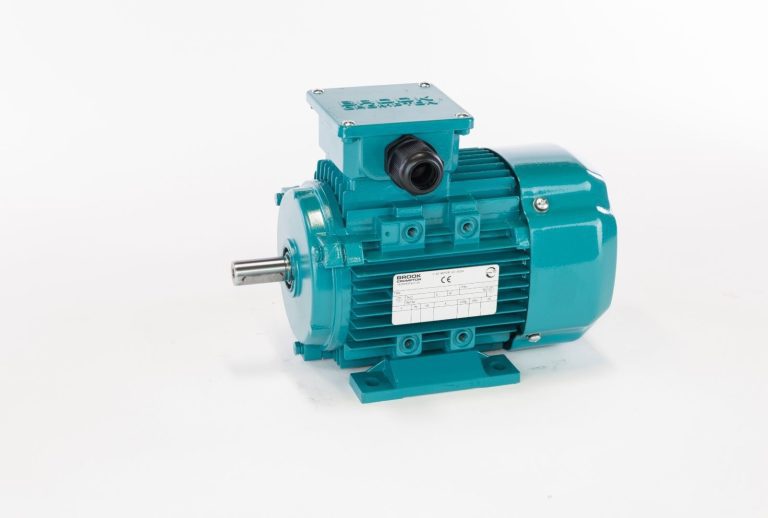
The longstanding World Series continues to offer IE2 efficiency upto .75kW, giving you this option. A robust premium motor with removable feet and a 3-year warranty (though they last a LOT longer than that).
When to Consider
Low running hours
If the motor will only be operational a couple of hours a day, it will be very unlikely to ever see a return on investment from going to IE3 or IE4 over IE2, as the energy difference may only be a couple of pounds a year.
For example, a .55kW 4 Pole IE2 motor has a minimum efficiency of 77.1% compared 80.8% from an IE3. With only a 3.7% difference at this power rating, the cost savings will be negligible.
Lower cost
IE2 motors will have the benefit of lower purchasing costs than the higher efficiency alternatives. This means, at lower power ratings, where energy savings between efficiencies are minimal, the total cost of ownership will be lower.
IE3 Motors
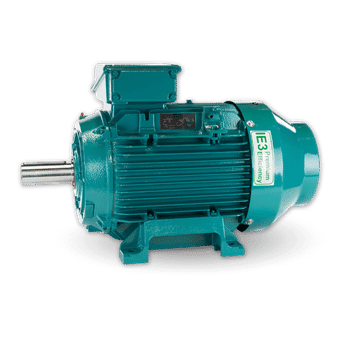
Due to the minimum efficiency regulations and the balance between efficiency and cost, IE3 is the most commonly bought motor type. Because of this, the majority of motors offered by BAWCo are IE3 standard. This includes: World Series (WS), WE3 Motors (WE3), and all Hazardous area/ ATEX motors.
The efficiencies across both the WS and WE3 safe area motors are the same, with only differences being the price and build quality of these motors: premium (WS) and low cost (WE3 & 4).
The Benefits
Lower energy consumption
Higher efficiency means less electricity is needed to produce the same output power. Since 90-95% of a motor’s total cost of ownership is energy consumption, this is the go-to choice for energy and cost savings on continuous use applications.
Reduced heat and extended life
With higher efficiency, less energy is lost as heat. As a result, IE3 motors benefit from reduced insulation stress and extended bearing and winding life. With bearing failure as the leading cause of unplanned downtime, this is a major factor to consider.
IE4 Motors
Between 75kW – 200kW 2/4/6 poles, IE4 is the minimum efficiency required. For Brook Crompton Motors, this means you have the options of the World Series and the WE4 range, allowing room for choice between premium and low-cost options, both offering different payback periods at the same efficiencies.

When to Consider
High power ratings
IE4 offers greater energy savings than IE3, with even more impact at high power-rated motors. This is especially important if electricity prices are high, the motors are running most of the day, or if the load is close to the rated capacity.
High energy costs
Since the first ecodesign requirements in 2021, the average energy prices have risen over 90% from 14.81 pence per kilowatt hour (kWh) in 2021 to a peak of 28.39 pence per kWh in 2023 (Office of National Statistics).
IE5 Motors
The latest design in energy efficiency with IE5 (Ultra Premium Efficiency) motors. IE5 comes in 3 different forms: Synchronous Reluctance (SynRM), Permanent Magnet (PM), and Induction.

How IE5 is achieved
PM (WEPM)
In an IE3 induction motor, the rotor copper loss accounts for nearly 30% of overall losses. The WEPM(A) IE5 motor uses permanent magnet technology use which eliminates the rotor copper losses.
Due to the rare earth materials needed for this motor, it is more expensive than the SynRM alternative; however, it offers a higher torque density, a smaller and lighter design, and responds faster to changes in load and speed.
SynRM (WERM)
SynRM still offers up to 97.4% overall efficiency, but with the cost-effective benefit of not using rare earth materials and instead utilises a specially shaped rotor that generates torque without rotor current.
IE5 Induction
The classic squirrel cage motor, now with improved rotor and stator designs, high-quality low-loss laminations, and better cooling to reduce electrical and mechanical losses, increasing efficiency to IE5 standards.
VSDs
Due to the design of the PM and SynRM IE5 motors, a variable frequency drive is required for starting. Because of this, the biggest savings with these motors are often seen with HVAC applications that can utilise both VSD and IE5 savings.