DC to AC Motor Conversion: A Real Case Study
Old DC motors were the workhorses of industry for a reason. Great starting torque, solid speed control, and a track record that kept them in service for decades.
But they come with a cost.
Field and armature repairs. Carbon brushes wearing down. Commutators needing constant attention. Downtime nobody budgeted for.
Modern AC motors, paired with an inverter, now do the same job. Sometimes better. No brushes to replace, no commutators to maintain, and efficient enough to meet today’s Ecodesign standards.
Less downtime. Lower costs. One less thing to worry about on the shop floor.
Here’s what that looks like in practice
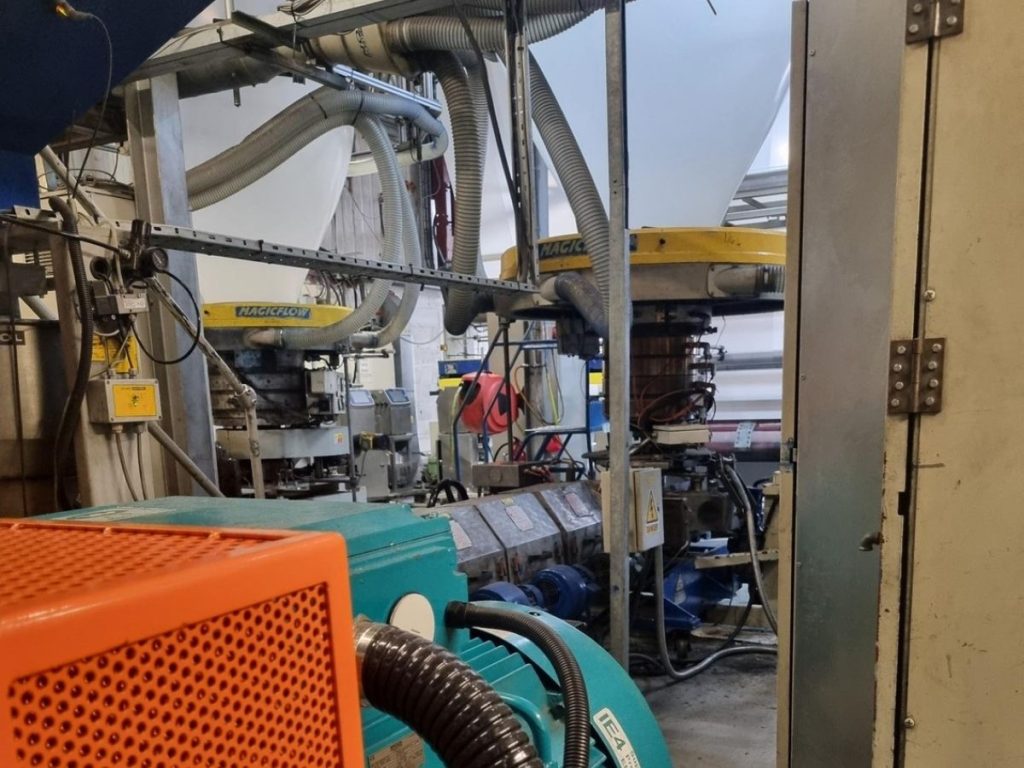
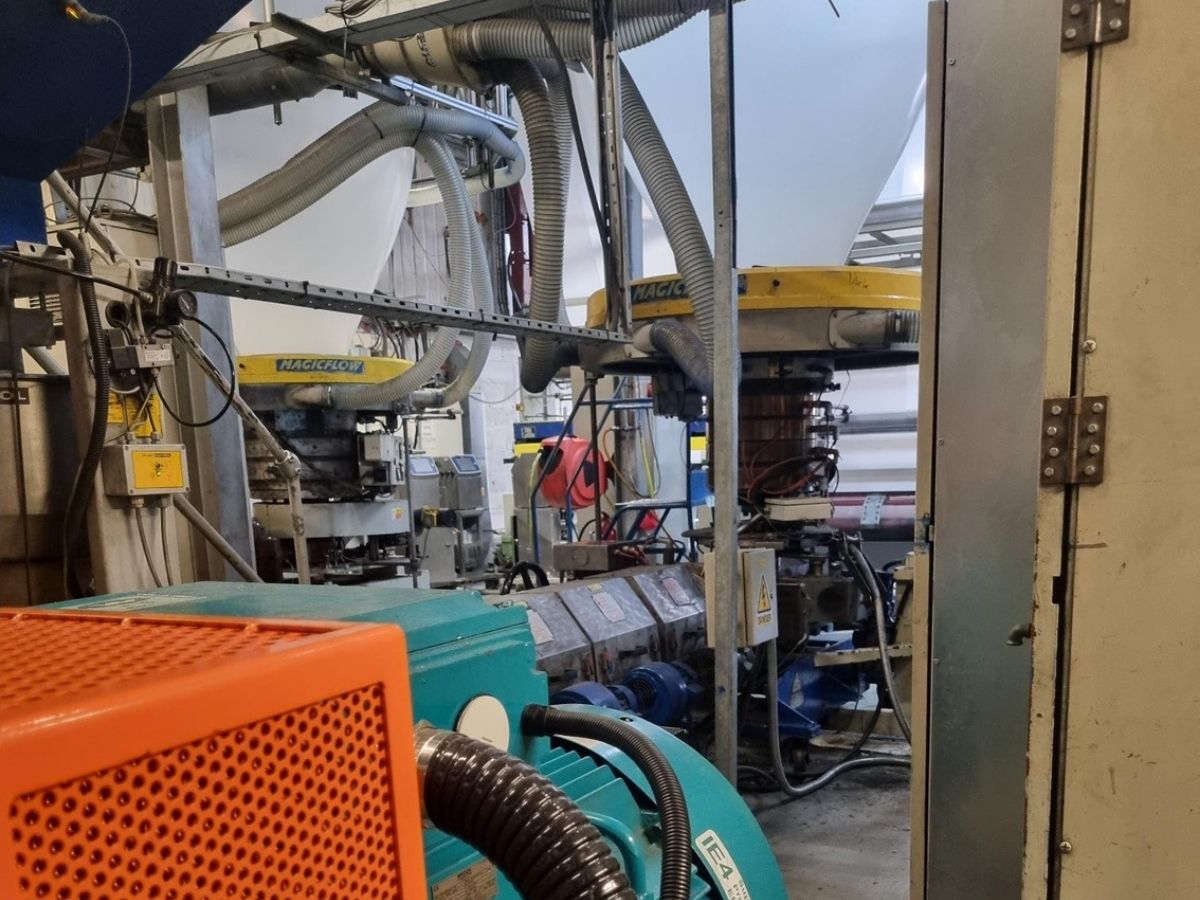
One of our regular customers of over 15 years, a Polythene Manufacturer in the North, has been upgrading the motors on one of their extruder lines with us.
Two motors upgraded already. A 140kW and a 180kW, done 7 and 3 years ago. Both jobs saved them time and money, enough that they came back for a third.
This one was a 35-year-old DC motor. Genuinely worn out. Doing its best, but past its prime.
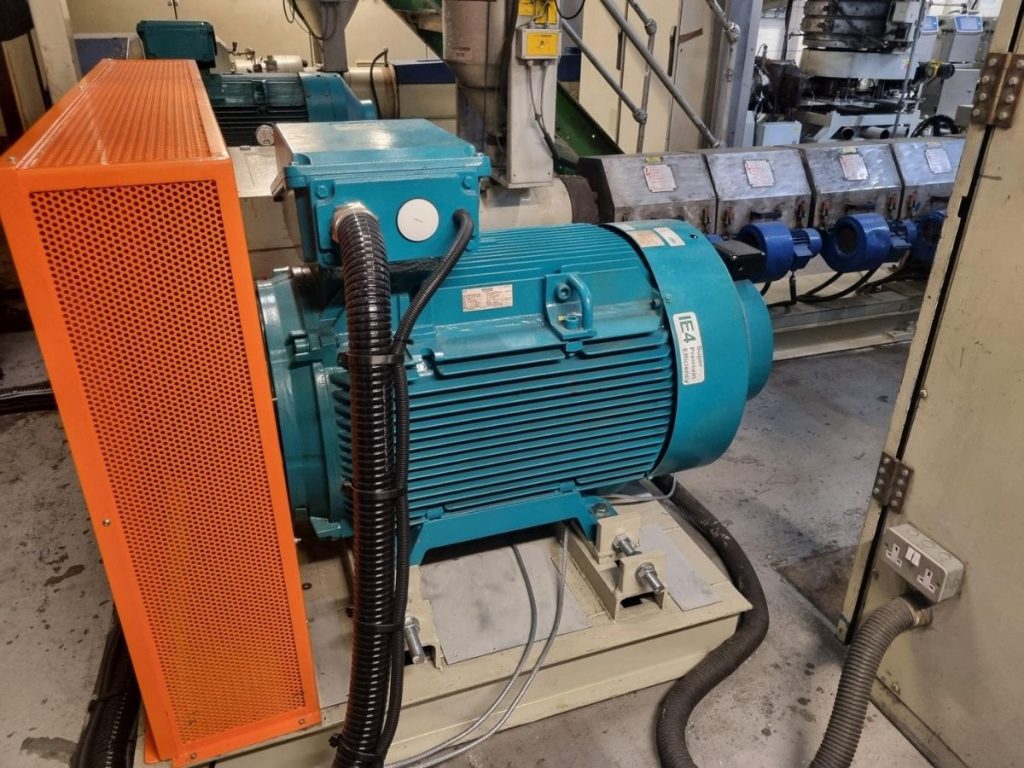
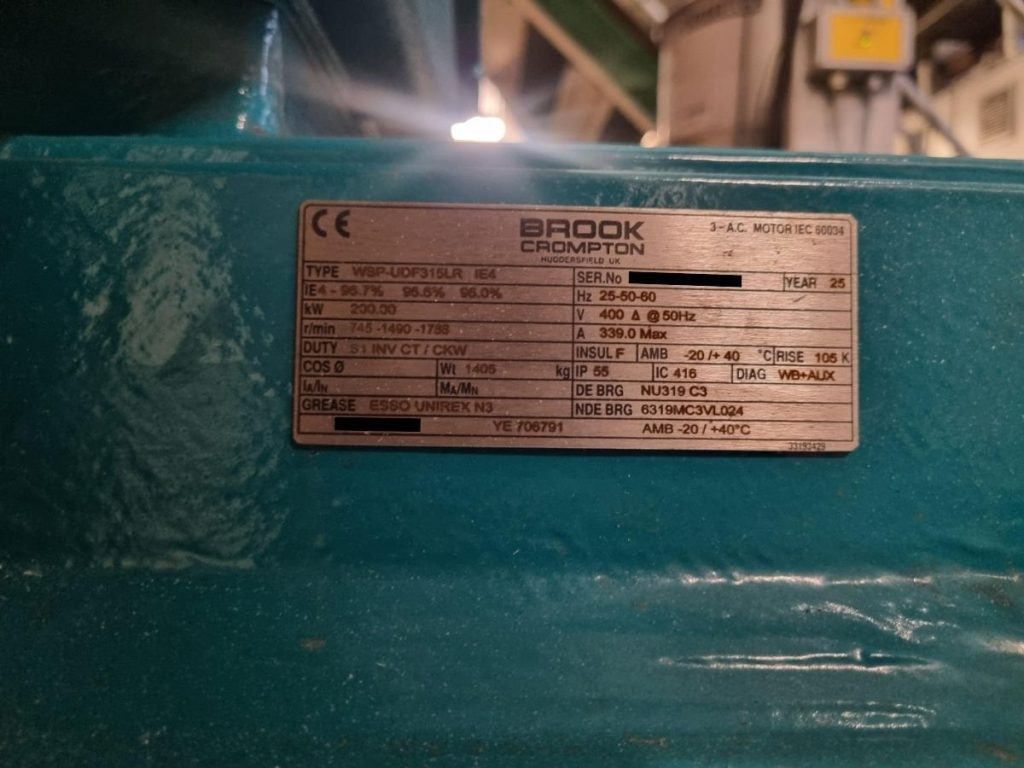
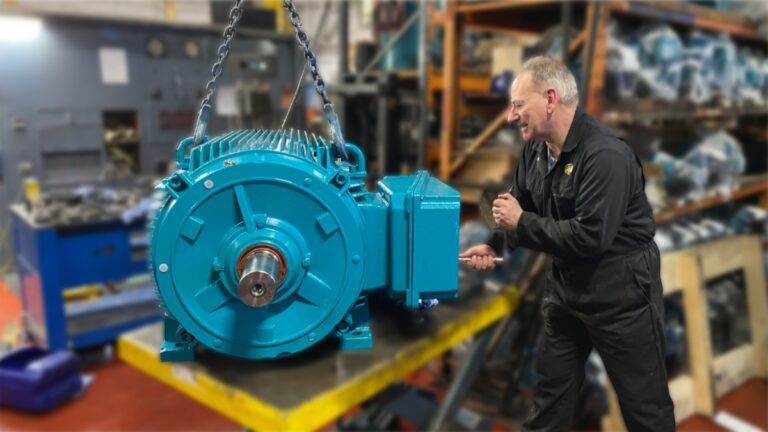
We replaced it with a Brook Crompton W Series IE4, 200kW, 4-pole, 315L frame, custom-modified to suit the application.
The modifications
That meant a few changes to make the new motor work for their setup:
- A smaller, bespoke force vent, so the control panel behind it stays accessible
- A panel-mounted Delta inverter drive, set for Constant Torque 25 to 50Hz and Constant Power 50 to 60Hz
- An insulated bearing on the non-drive end, needed for inverter control on a motor this size
- A roller bearing on the drive end, for the belt application
The result
All three motors now share the same frame size. That means future lines can be upgraded as budgets allow, and the customer can hold a single common spare for these critical motors, simplifying maintenance for years to come.